Zhenzhen's AI Radar · MiniMax H3 · 2026-11-23 Morning Report
This issue features 5 new versions: Strongly Recommended 1 · Recommended 1 · Worth Watching 2 · Listed Only 1
Editor's Note This issue reviews 5 new H3 versions: 1 S, 1 A, 2 B, and 1 C. The top recommendation is the KinetiX wing flap frequency slider: positive intensity causes wings to flap rapidly at high frequency, while negative intensity results in heavy, slow flapping. It includes intensity tiers, ready-made comparison prompts, and 7 example clips, upgrading from B to S. The Nova.1 lip-sync timeline workflow integrates native H3, H3 lip-sync, and WAN InfiniteTalk into a single timeline with complete first-run steps, upgrading from B to A. The CleanTie / HandTie 8-step Ref2VA base model has complete parameters but all examples are hidden, remaining at B. The Sulphur-3 × 10Eros merged base model only discloses the merge recipe without any usage instructions; the author labels it a beta, downgrading from A to B.
Strongly Recommended (1)
[S] KinetiX Flight & Wing Dynamics Series · Wing Flap Frequency V1.0
LoRA · New Model · Author make676767 · Published 11-22 23:01 · Downloads 91
A slider LoRA that controls wing flapping frequency: positive intensity makes winged subjects like dragons, phoenixes, raptors, and hummingbirds flap faster and more densely, while negative intensity results in heavy, slow-gliding flaps. The author claims it does not alter lighting, color, or subject appearance.
(Editor upgraded from B to S: The new capability is clear, with complete intensity tiers, ready-made comparison prompts, and 7 example clips; the automatic rating was capped only because the attached compressed package scan was incomplete.) Suitable for running negative, zero, and positive comparisons with the same seed.
Images

Reasons for Recommendation
- New Model: A new "Flight and Wing Dynamics" branch in the KinetiX action slider series, addressing the uncontrollable rhythm of wing flapping in text-to-video / image-to-video generation—dragons need heavy, slow flaps, while hummingbirds need high-frequency fluttering; the same prompt switches modes solely via intensity.
- Complete intensity tiers: +1.5 ~ +3.0 and -2.0 ~ -4.0 are two recommended ranges, +4.0 ~ +5.0 is for extreme high frequency, and -6.0 ~ -8.0 is claimed by the author to break down hummingbird high-frequency motion blur into clearly distinguishable slow flaps.
- Includes two ready-made prompts for a dragon flying through thunderstorm clouds and a macro hovering hummingbird; the author suggests running negative, zero, and positive tiers with the same seed for comparison; also provides stacking recipes with the series' motion amplitude and action chain sliders.
- 7 example videos are visible; free, license allows image generation and sales, published 10 hours ago with 91 downloads.
How to Use
- Load KinetiX_dyn_wing_flap_frequency_h3_v1.safetensors (approx. 2 MB, BF16) in the H3 workflow, no trigger word required; recommended intensity is +1.5 ~ +3.0 for fast flapping and -2.0 ~ -4.0 for slow flapping, with 0 being the base model's original state.
- Write prompts as usual for winged subjects and flight actions (e.g., wings beating); intensity determines frequency; the author's dogfight pursuit recipe uses this LoRA at +3.0 stacked with the series' movement amplitude v2 at +1.5.
- Steps, sampler, and acceleration LoRA are not provided by the author.
Risks and Limitations
- All effect descriptions are author claims; none of the 7 example clips include prompts, making it impossible to determine the intensity used for each.
- The attached workflow_resources compressed package security scan is incomplete, and the content model card lacks explanation; additionally, 1 sensitive-level examples are hidden.
Recommended (1)
[A] LipSync: Minimax H3 / Wan InfiniteTalk + H3 Native (TFL2VA) · Nova.1
Workflow · New Model · Author Rvage · Published 11-23 06:48 · Downloads 31
A ComfyUI workflow that integrates native H3, H3 lip-sync, and WAN InfiniteTalk video modes into a single timeline: generates speaking/singing performances from a portrait and an audio recording, or generates based on reference video edit points and action storyboards.
(Editor upgraded from B to A: Usage and operation steps are very complete; the automatic rating was capped due to JSON scan status; heavy dependencies and few visible examples prevent an S rating.)
Images
Reasons for Recommendation
- New Tool: Serves lip-sync MVs, voiceovers, and segmented song generation; three modes share the timeline, model loader, prompt review, saved runs, and final export, allowing segment-by-segment generation and resuming from archives.
- Clear mode division: Native H3 performs text-to-video, first-frame, first-last-frame, or reference-guided generation at 24 FPS, with H3 generating audio itself if the final audio track is set to None; H3 lip-sync drives mouth shapes at 24 FPS using reference images and audio; WAN InfiniteTalk extends segments sequentially at 25 FPS using motion frames from the previous segment.
- Can integrate YuE2 or MiniMax Music 3 to create songs on the fly, using Demucs to separate vocals for lip-sync driving while retaining the full mix in the final video; reference videos can be automatically shot-cut, with descriptions for each shot written by a visual LLM.
- The author provides complete first-run steps: use one portrait and one clear vocal track, start with a short segment, generating and checking one segment at a time; 1 example videos are visible, free, published 2 hours ago with 31 downloads.
How to Use
- Import Unified_Video_Timeline_Nova_H3_LS.json (H3 lip-sync version) or Unified_Video_Timeline_Nova_WAN_LS.json (WAN version); requires installing Eclipse Nova, Smart Model Loader Nova, SmartLLM Nova, and optionally ComfyUI-sol-attn (H3 patch) and Audio Separation Nodes (Demucs).
- First select the mode in the Video Timeline Planner, then manually select the corresponding preset in the shared model loader: use MiniMaxH3_TFL2VA for native H3, MiniMaxH3_LipSync for H3 lip-sync, and Wan_Lipsync for WAN (if unavailable, configure WAN image-to-video model, text encoder, and VAE separately and save as a preset).
- For the H3 branch, use CFG 1 as per the author's instructions; steps and sampler should follow the recipe of the used H3 checkpoint or acceleration LoRA; the WAN branch additionally requires the InfiniteTalk single-person patch and speech encoder.
Risks and Limitations
- Depends on multiple custom node packages and both H3 and WAN model sets; this workflow has not been run; pickle scans of the two JSONs show Error (common for workflow JSONs), but virus scans passed.
- Only 1 videos and 1 interface screenshots are visible; additionally, 8 sensitive-level examples are hidden; the license does not allow commercial use or derivatives.
- Supports only a single speaker; the full model card states that H3 has a minimum frame count per generation, requiring full-segment generation even for short shots.
Worth Watching (2)
[B] Minimax-H3-Sulphur3-10Erosmax-Merge · v1.0
Base Model / Checkpoint · New Model · Author 0l1v1aR0551 · Published 11-22 23:51 · Downloads 331
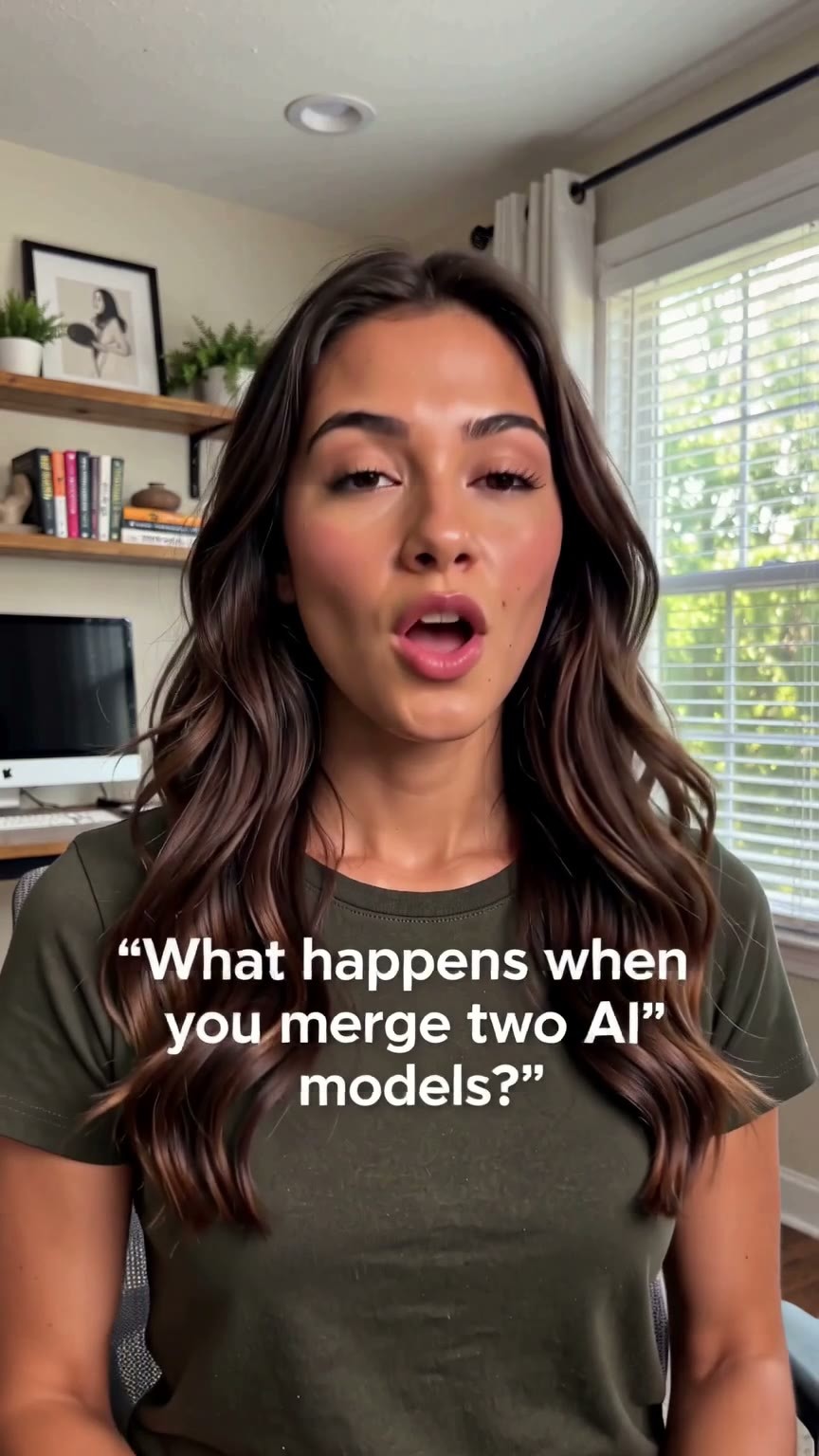
An H3 base model created by linearly merging half of Sulphur-3 and half of 10Eros-Max 8-step Turbo, then baking in two distillation acceleration LoRAs, DMAD and pDMD; the author labels it a beta.
(Editor downgraded from A to B: Only the merge recipe is provided, with no usage instructions such as steps or samplers; the author labels it a beta.)
Images
Reasons for Recommendation
- New Model: Merge recipe disclosed—Sulphur-3 and 10Eros_Max_8stepTurbo merged at 0.50 / 0.50, with DMAD 8-step distillation LoRA baked in at 0.85 and pDMD 4nfe v6 at 0.333 sequentially.
- Serves users wanting an H3 base model with built-in acceleration, eliminating the need to attach separate distillation LoRAs; the file is a single INT8 ConvRot quantized file.
- 2 videos + 1 images are visible; free, published 9 hours ago with 331 downloads and 27 likes, making it the most downloaded H3 version this issue (indicating attention only).
How to Use
- Download Minimax-H3-Sulphur3-10Erosmax-Merge_int8_convrot.safetensors to replace the H3 base model load.
- Steps, sampler, and shift are not provided by the author; DMAD and pDMD are already baked in, and the author does not specify whether additional acceleration LoRAs can be stacked.
Risks and Limitations
- The author labels it "basically a beta"; the model card contains only the merge recipe with no usage instructions.
- The merge source 10Eros-Max leans towards adult content; the license does not allow derivatives.
[B] CleanTie & HandTie — V2Sing Hybrid (8-Step MiniMax-H3 Ref2VA) · v1.0
Base Model / Checkpoint · New Model · Author sandpies · Published 11-22 22:06 · Downloads 141
A 8-step merged base model for H3 reference-to-video (Ref2VA), featuring two files on one page: CleanTie is the general version, while HandTie adds human structure enhancement on top of it; both have 8-step acceleration baked in, and the author claims the audio head was untouched, preserving cloned timbre.
The parameters are the most detailed for an H3 model this issue, but with no visible examples, users must compare based on the author's recommended settings.
Images
Reasons for Recommendation
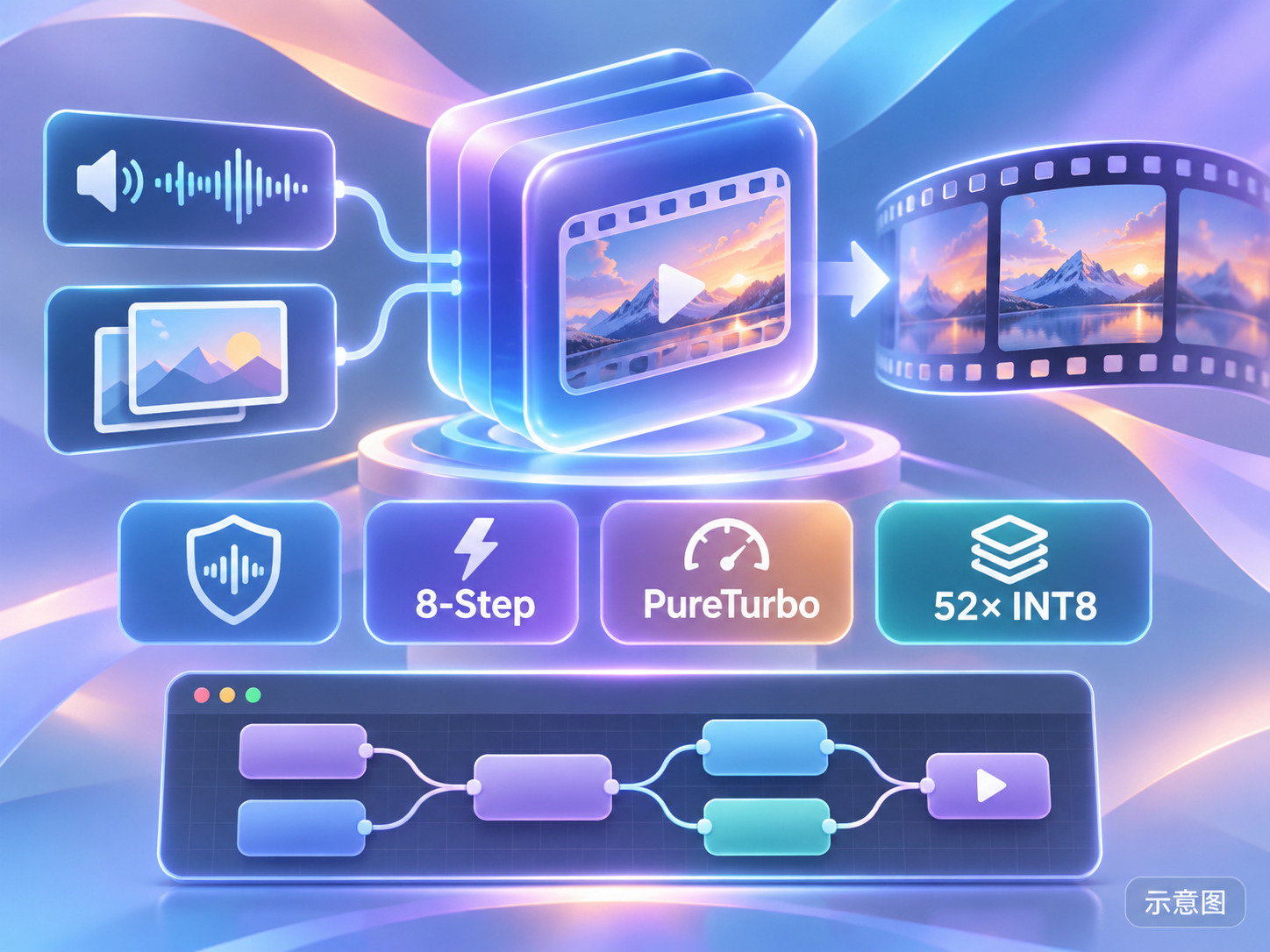
- New model: The author states they mixed FL2VA with Singularity V2 Ref2VA, then baked in PureTurbo (Pika-H3-Flex × DMAD) 8-step acceleration and INT8 attention, aiming to preserve reference character appearance, props, and cloned voice at 8 steps, serving dialogue and MV-style reference-to-video generation
- Recommended settings provided in full: 8 steps, sampler lcm or euler, scheduler beta_57 / beta / simple; ModelSamplingMiniMaxH3 shift_video 12.0, shift_audio 2.0–3.0 (author's tested values 12.0 / 2.5)
- The author advises against stacking additional acceleration LoRAs, and against stacking body LoRAs on top of HandTie; style and character LoRAs can be loaded at standard 0.2–0.6 strength
- Free, license permits selling and derivatives; 11 hours after release, 141 downloads, 12 likes
How to Use
- For general scenarios, download cleantie_v2Sing_hybrid_base_turbo_int8_minmaxxed.safetensors and replace the H3 Ref2VA base model for loading; requires updating ComfyUI and installing comfy-kitchen 0.2.41 or a newer version
- Start with 8 steps, lcm + beta_57, shift_video 12.0 / shift_audio 2.5, and do not stack additional 8-step acceleration LoRAs
- BF16 and other precisions, unbaked base models, and multi-segment Ref2VA chaining tools are available on the author's Hugging Face and GitHub; Civitai only hosts the INT8 version
Risks and Limitations
- All 6 examples are sensitive-rated and hidden, so no results are visible on the site
- The single file is approximately 21 GB, and INT8 weights depend on the new version of comfy-kitchen
- The card image is an AI-generated schematic, not the actual model output; the author has no publicly available non-sensitive examples
Included Only (1)
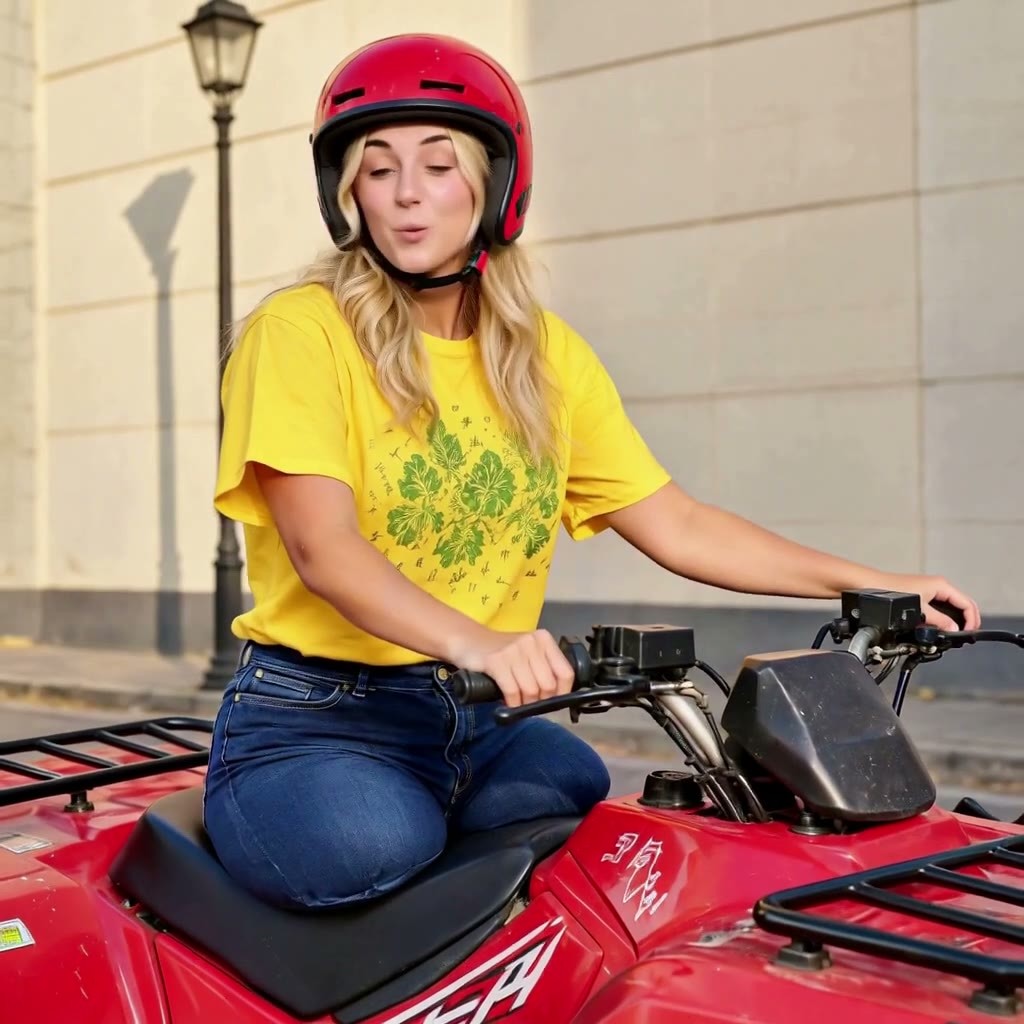
- Double above knee amputee movement · Minimax — LoRA: Motion LoRA: Makes movements of characters with above-knee bilateral amputations more realistic.
Data: Civitai public API (base model MiniMax H3), inclusion window 11-22 20:31 → 11-23 09:01 (Beijing Time). Recommendation reasons reviewed by editors; download counts reflect attention only.