Zhenzhen's AI Radar · MiniMax H3 · 2026-11-26 Evening Report
This issue features 8 new versions: Strongly Recommended 0 · Recommended 1 · Worth Watching 5 · Listed Only 2
Editor's Note This issue reviews 8 new versions of H3, with 1 rated A, 5 rated B, and 2 rated C. The top recommendation is the "Dexter's Laboratory" thick-line animation style LoRA: it transforms characters from reference images into 2D animation shots with thick black outlines and flat colors. Strength settings, accompanying acceleration LoRAs, samplers, and step counts are provided, but since it mimics the art style of an existing animated IP and the version name is still "prototype," its rating was downgraded from S to A. The KinetiX startup acceleration slider, the new RefGate version of FL2VA Refusion, the lip-sync timeline workflow Nova.2, and MinimaxH3-Studio 1.4.6 all have clear purposes but lack visible examples or complete documentation, so they are rated B; the action speed slider v2 is a paid download, also rated B. Two character LoRAs only provide background stories without trigger words and parameters, so they are rated C.
Recommended (1)
[A] Dexter's Laboratory Art Style · prototype
LoRA · New Model · Author OrioTysumi · Released 11-26 19:36 · Downloads 19
A LoRA that mimics the art style of the animated series "Dexter's Laboratory": it transforms images into 2D animation shots with thick black outlines and flat color blocks. The author claims that in Reference-to-Video (R2VA) mode, it can apply this thick-line animation style to character reference images you provide.
(Editor downgraded from S to A: Parameters are fully provided and examples exist, but it is a prototype version of an existing IP's art style)
Images

Reasons for Recommendation
- New model: The author provides complete usage instructions—strength 1, paired with DMAD 4 step acceleration LoRA, sampler er_sde, scheduler beta, 6 or 8 steps
- Optimized for Reference-to-Video: The author claims it works best in R2VA mode; for Text-to-Video (T2VA), strength should be reduced to 0.5 or below
- Includes 2 visible example videos; free, license allows rental
How to Use
- Trigger word: Dexter; add 'thick-line animation style' or '2D animated sequence with thick black outlines and flat colors' in the prompt
- R2VA: Strength 1 + DMAD 4 step LoRA, er_sde / beta, 6 or 8 steps; T2VA: Strength 0.5 or lower
Risks and Limitations
- Mimics the art style of an existing animated IP; the model card does not specify licensing; the version name is "prototype," indicating an early version
- Only 2 video examples are visible, while another 2 are hidden; stability across different characters and scenes is unknown
Trigger Word: Dexter
Worth Watching (5)
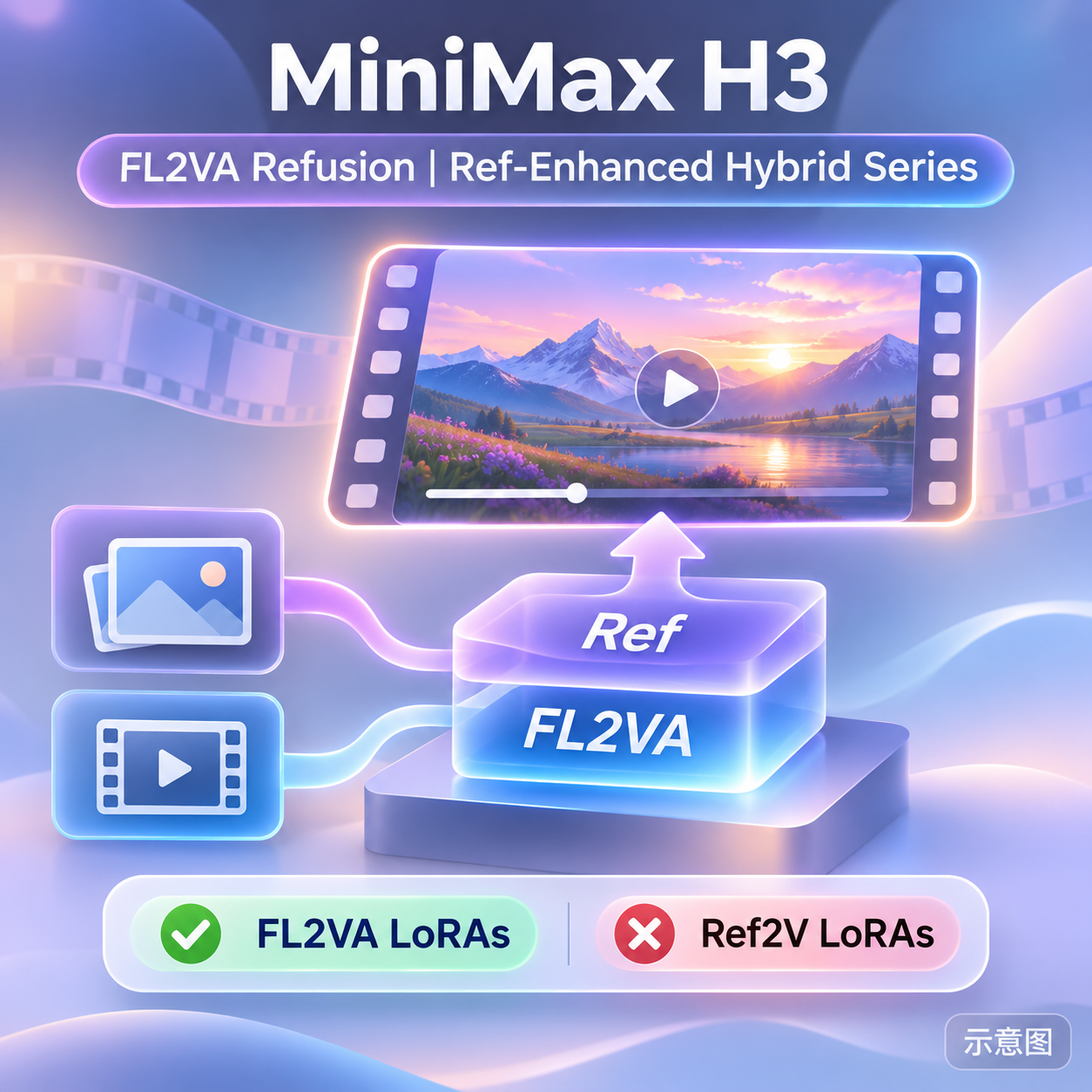
[B] MiniMax H3 – FL2VA Refusion | Ref-Enhanced Hybrid Series · Turbo V3.0_RefGate_P-BF16
Base Model / Checkpoint · Version Update · Author Aki7777777 · Released 11-26 15:31 · Downloads 32
The new RefGate version of the FL2VA and Ref2VA fusion base model series: It continuously mixes Ref2VA modulation parameters into the FL2VA (first/last frame) base model according to denoising timesteps. The author claims it balances reference image consistency with motion freedom, and includes built-in 4 step Turbo distillation.
(Editor maintains B: Architectural approach is clearly written, but there are no visible examples)
Images
Reasons for Recommendation
- Version update: The same model page previously featured the SparseRef15 series (which only replaced Ref2VA parameters in some transformer blocks); this version switches to the RefGate architecture, performing time-step-dependent fusion across all blocks; the update notes section is empty, with content only in the model card
- Suitable for action scenes, long shots, and multi-segment continuous generation where character reference consistency must be maintained while allowing large motion amplitude; the author claims support for native audio generation
- Includes built-in Turbo distillation LoRA; the author recommends 6 steps or more, with no additional acceleration LoRA needed; free, license allows image output and rental
How to Use
- Sampler Euler, scheduler beta, 6 steps or more; use nodes such as Reference-to-Video / Ref2VA, MiniMaxH3AddGuide, etc.
- The author emphasizes this is not a native Ref2V model; use LoRAs compatible with FL2VA, do not use Ref2V LoRAs
Risks and Limitations
- The only example is hidden, so the effect cannot be seen; the author has not written update notes
- The file is a pruned BF16 full base model, which is large in size; the RefGate section in the model card still says "Coming Soon / Final Testing," which contradicts the status of the uploaded version
- The card image is an AI-generated diagram, not the actual effect of the model; the author has no publicly available standard-level examples
[B] KinetiX Combat Timing Series (Hit-Stop & Frame Freeze Slider [MiniMax-H3]) · Action Startup Snap V1.0
LoRA · Version Update · Author make676767 · Released 11-26 18:30 · Downloads 36
The "Startup Acceleration" slider LoRA in the KinetiX Combat Timing Series: It only compresses the preparatory frames between standing stance and attack initiation. Positive values result in crisp, hesitation-free strikes; negative values extend the wind-up. The author claims it does not affect the rhythm of hits or recovery.
(Editor maintains B: Purpose and weight tiers are clear, but there are no visible examples)
Images

Reasons for Recommendation
- Version update: This is the 3th version in the same series (the previous two versions were Hit-Stop and Charge Tension); this version introduces a new startup slider; the update notes section contains only separators, with content written in the model card
- Suitable for martial arts and duel shots in Text-to-Video / Image-to-Video: The author claims it does not interfere with global speed sliders, adjusting only the moment of attack initiation
- The author provides weight tiers and positive/negative prompts; free, license allows image output, rental, and sale
How to Use
- No trigger word; recommended weight +2.0, common range +1.5 ~ +3.0, extreme range +3.5 ~ +5.0, when stacking multiple LoRAs use +0.5 ~ +1.2, negative values -2.0 ~ -5.0 for slow wind-ups
- Positive prompt: instant snappy attack startup, zero hesitation, crisp immediate strike onset; Negative prompt: sluggish delayed attack startup, prolonged slow wind-up before strike
- Steps and sampler are not provided by the author; a workflow resource archive is included
Risks and Limitations
- All 6 examples are hidden, so actual effects cannot be seen
- The security scan for the workflow resource archive is still Pending; the author has not written update notes
- The card image is an AI-generated diagram, not the actual effect of the model; the author has no publicly available standard-level examples
[B] LipSync: Minimax H3 / Wan InfiniteTalk + H3 Native (TFL2VA) · Nova.2
Workflow · Version Update · Author Rvage · Released 11-26 19:47 · Downloads 18
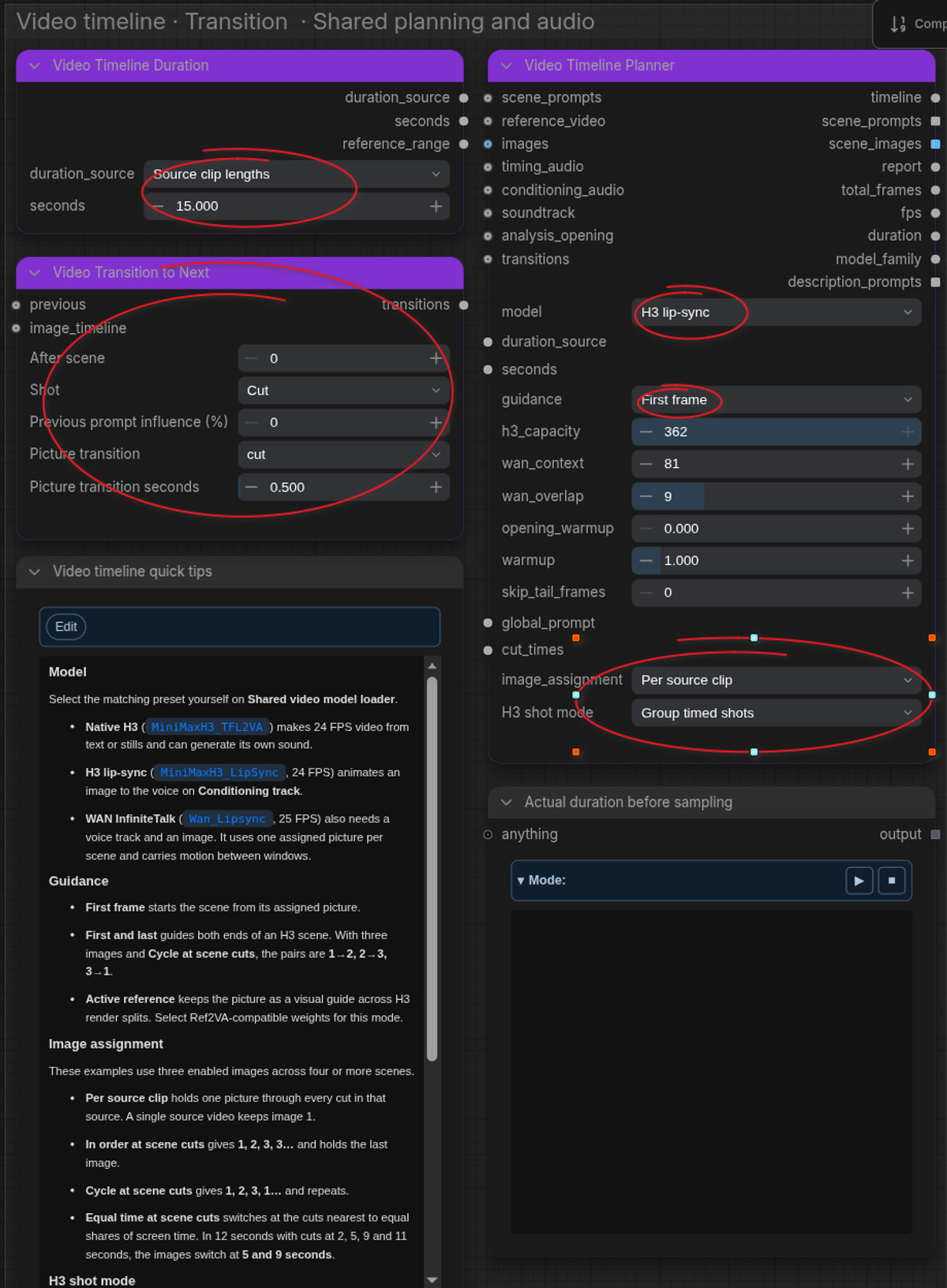
Unified video timeline workflow Nova.2: Arranges three modes—H3 native generation, H3 lip-sync, and WAN InfiniteTalk—on a single timeline. It uses portraits plus audio recordings for speaking/singing performances, or generates scenes with built-in sound effects, and exports them uniformly.
(Editor maintains B: Update content is clear, but dependencies are heavy and there are no visible finished videos)
Images
Reasons for Recommendation
- Version update: Update notes specify upgrading Eclipse Nova to 1.0.50, fixing the planner, adding new modes, transitions between segments, and prompt continuation for long shots
- Suitable for lip-syncing and multi-segment narrative videos: H3 lip-sync and native H3 output at 24 FPS, InfiniteTalk outputs at 25 FPS; songs can be generated using YuE2 or MiniMax Music 3
- It is a workflow, not new weights; free
How to Use
- Import Unified_Video_Timeline_Nova.2.json, install node packages such as Eclipse Nova, Smart Model Loader Nova, SmartLLM Nova, etc.; select the model in Video Timeline Planner, then manually select the corresponding preset in the shared model loader
- Endpoint guidance uses FL2VA compatible weights; Active reference uses Ref2VA compatible weights; steps and samplers follow the loader presets, which are not specified by the author in the instructions
Risks and Limitations
- Depends on multiple third-party node packages and several sets of models, resulting in a high setup barrier; JSON file security scan shows Error / Success
- Only 1 images are visible as examples, while another 2 are hidden; the license does not allow commercial use or derivatives
[B] MinimaxH3-Studio · v1.4.6
Other · New Model · Author rookiestar28 · Released 11-26 11:11 · Downloads 31
MinimaxH3-Studio is an open-source (Apache-2.0) ComfyUI sidebar plugin: It integrates prompt planning, calling official H3 workflows for output, segmented long video planning, and built-in multi-track editing into ComfyUI; 1.4.6 fixes the issue where long video generation was blocked on newer versions of ComfyUI.
(Editor maintains B: Tool functions and fix descriptions are clear, but there are no visible examples)
Images

Reasons for Recommendation
- Changes in 1.4.6: 1.4.5 could not recognize the native H3 nodes included with ComfyUI 0.44 and later, causing long videos in T2VA and first-frame/first-last-frame/last-frame modes to be blocked; this version fixes it. If recognition fails, it prompts users to update ComfyUI first
- Suitable for users who want to complete "write prompt—generate segments—assemble long video—edit/export" in one stop within ComfyUI: Five task modes, with long videos generated segment by segment according to storyboards and then stitched together
- Free and open-source, requires no additional Python dependencies, can be searched and installed via ComfyUI Manager
How to Use
- cd into ComfyUI/custom_nodes, then git clone https://github.com/rookiestar28/MiniMaxH3-Studio.git,或在 ComfyUI Manager and search for ComfyUI-MiniMaxH3-Studio
- Requires native ComfyUI H3 nodes and official templates; the author has generated two-segment T2VA long videos using a 4-step Turbo LoRA on ComfyUI 0.46.0; editing and final rendering require a Windows system and a self-provided FFmpeg
Risks and Limitations
- The only example is hidden, so the interface and final output are not visible
- The editor currently supports only Windows; the license does not allow commercial use (Civitai license field), which needs to be cross-checked against the Apache-2.0 stated in the model card
- The card images are AI-generated illustrations, not actual model outputs; the author has no publicly available standard-level examples
[B] Motion-Speed-MMH3-SLIDER · Motion Speed v2
LoRA · Version Update · Author make676767 · Published 11-26 17:08 · Downloads 2 · Paid
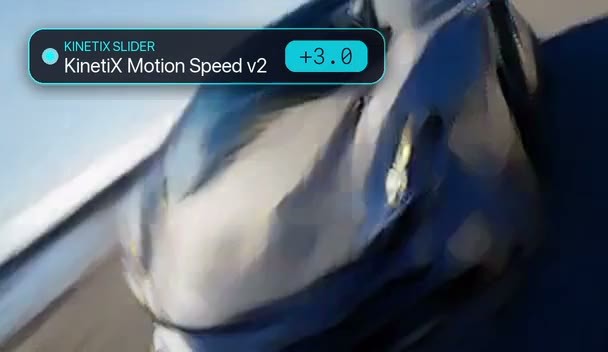
KinetiX Motion Speed Slider v2: Bidirectional control over the speed at which subjects, vehicles, and fighters move within the frame. Positive values create fast sprints and high-speed traversals, while negative values slow movement to a leisurely pace. The author claims it does not alter characters or color grading.
(Editor maintains B: Purpose and weights are clear, but the paid status and v2 changes are not explained)
Images
Reasons for Recommendation
- Version update: The 5th version on the same model page. The author claims it is an upgrade to v2, but the update notes only restate the features without specifying what changed compared to the previous version
- Serves text-to-video/image-to-video shots requiring adjusted displacement speeds, such as chases, racing, and fighting
- The author provides weight tiers and positive/negative prompt templates
How to Use
- No trigger word; recommended range +1.2 to +2.0 (common range +1.2 to +2.5), extreme range +3.0 to +5.0, and negative values -2.0 to -5.0 for slow motion
- Example positive prompt: fast responsive physical movement, rapid forward velocity across the frame; step count and sampler are not provided by the author
Risks and Limitations
- Paid download (permanent payment)
- 4 visible example videos, with another 7 hidden; the model card lists a separate recommended value of ±4.0, which is inconsistent with the tiers above
- The security scan for the workflow resource archive is still Pending
Included Only (2)
- Sunny — MiniMax H3 Character RefMod · v1.0 — LoRA: An H3 character LoRA (RefMod) for the original fictional female character Sunny. The description states only “original character, does not correspond to a real person.”

- Amira NordhavenLove · MiniMaxH3 — LoRA: An H3 ported LoRA for the fictional realistic female character Amira Nordhaven. The same model page also has ZImageTurbo, MOSS Image, and Krea 2 versions.

Data: Civitai public API (base model MiniMax H3), inclusion window 11-26 08:31 → 11-26 21:01 (Beijing Time). Recommendation reasons have been reviewed by editors; download counts represent attention only.